
Suquamish stretches along the west side of Puget Sound in Kitsap County, where shoreline homes, wooded parcels, and properties near the Suquamish Tribe’s ancestral lands call for careful, site-specific tree work. Tight access, sloping ground toward the water, and aging conifers with roots affected by coastal soils all shape the job. Our network of tree care professionals in Seattle knows how to evaluate storm-damaged limbs, manage root growth near shoreline structures, and clear hazardous canopy from properties that need to stay safe and reachable through Puget Sound’s changeable weather.
That is why more property owners in Suquamish, WA, turn to Arbor Tree Care for dependable maintenance throughout the year.

Prefer to Talk to An Expert?
(206) 201-1214
Why Suquamish Property Owners Rely on Local Experts
Crews with local experience understand the coastal winds, dense native conifers, and waterfront slopes that make this area different. That knowledge shapes every job, with tools and methods chosen for Suquamish conditions, including salt air wear, storm breakage, and unstable roots common on the Kitsap Peninsula.
From professional tree pruning solutions along Division Avenue NE near the waterfront bluff to structural canopy clearing near the Chief Seattle Club grounds on South Street, each project is completed with care, precision, and long-term property health in mind.
If you care about your landscape, work with local professionals who can keep your trees healthy, tidy, and safe in Suquamish.
Our Tree-Service Services
in Seattle, WA, Include
Tree Care Built for Your Suquamish Neighborhood
Steep shoreline lots and narrow residential roads mean tree care in this area has to be customized, not generic. That is why local crews adapt to each property layout, whether the work calls for rigging on a grade or hand pruning near protected shoreline buffers.
It does not matter if the property is a wooded home in the Old Suquamish village area, a waterfront lot on Angeline Avenue NE, or a larger forested parcel near the Suquamish Museum and cultural center.
From tree trimming and stump removal to root protection and tree disease treatments, services are matched to the neighborhood’s setting and each property’s specific needs.
Suquamish’s Canopy, Shaped by History and Place
Suquamish is one of the oldest continuously inhabited communities in the Puget Sound region, and its landscape reflects generations of native forest, coastal ecology, and later residential growth along the shoreline. That history still shows up in the mature conifers, thick understory growth, and compacted soils that influence how tree care is handled today.
Mature Conifers Near Waterfront Structures
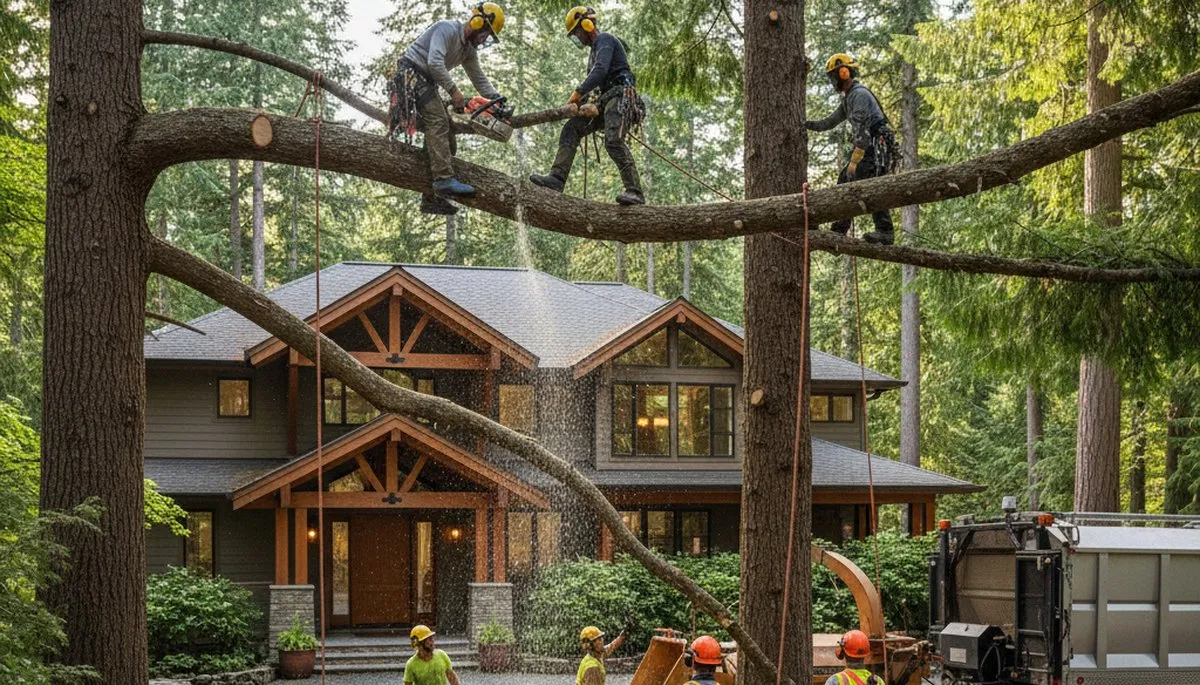
Many Suquamish properties, especially those along Angeline Avenue NE and the bluff-side lots above Puget Sound, have Douglas firs and western red cedars that have reached substantial height over many years. As these trees age, wind events can increase limb failure risk, while root systems may press against foundations, retaining walls, and septic systems, creating real safety and structural concerns.
Local professionals address those issues with targeted canopy reduction, careful limb removal, and reliable stump removal services after tree removal, helping prevent access problems and long-term structural damage on sensitive sites.
Salt Air and Coastal Wind Stress
Living on Puget Sound offers scenic views, but the salt-heavy air and steady southwest winds can wear down bark and speed up crown decline. Trees exposed to western winds often develop brittle wood and weaker structure, which can lead to sudden breakage during fall and winter storms.
Professionals handle those conditions with selective crown thinning, deadwood removal, and expert storm damage response tailored to the exposure level of each waterfront or near-water property.
Fungal Pressure in Shaded Understory Areas
High humidity and limited airflow in dense second-growth forest can make it harder for Suquamish trees to resist fungal diseases, including root rot and laminated root disease that are common among Pacific Northwest conifers.
Trusted crews support these trees with targeted tree disease treatment programs, soil aeration, and canopy thinning that improve airflow, support tree health, and reduce disease spread to nearby trees.
Storm-Season Limb Failure and Fast Response
From October through March, Kitsap County storm season brings strong winds off Puget Sound, heavy rain, and occasional ice that can cause limbs to break or entire trees to fall on Suquamish properties.
Experienced crews respond with aerial hazard assessment, controlled sectional felling, and organized debris removal to restore access and protect structures even during severe Puget Sound weather.
Limited Access on Narrow Roads
Suquamish has many narrow lanes, dead-end streets, and steep driveways, which makes equipment staging and safe tree removal more complicated than on a typical suburban lot.
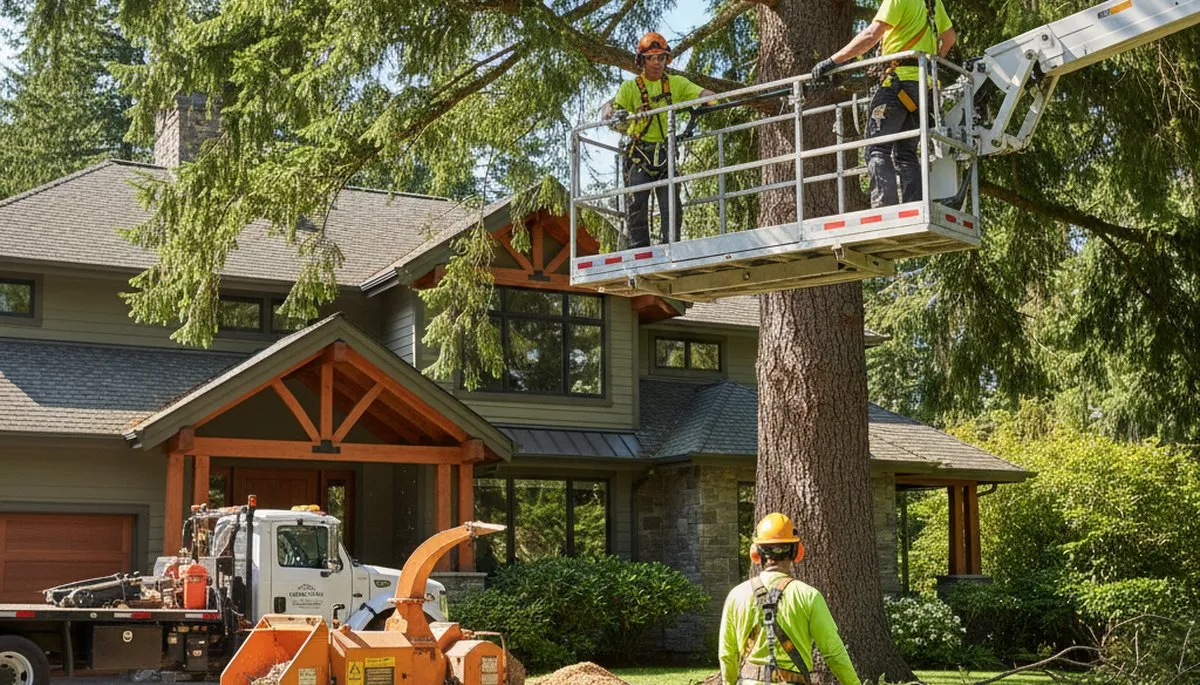
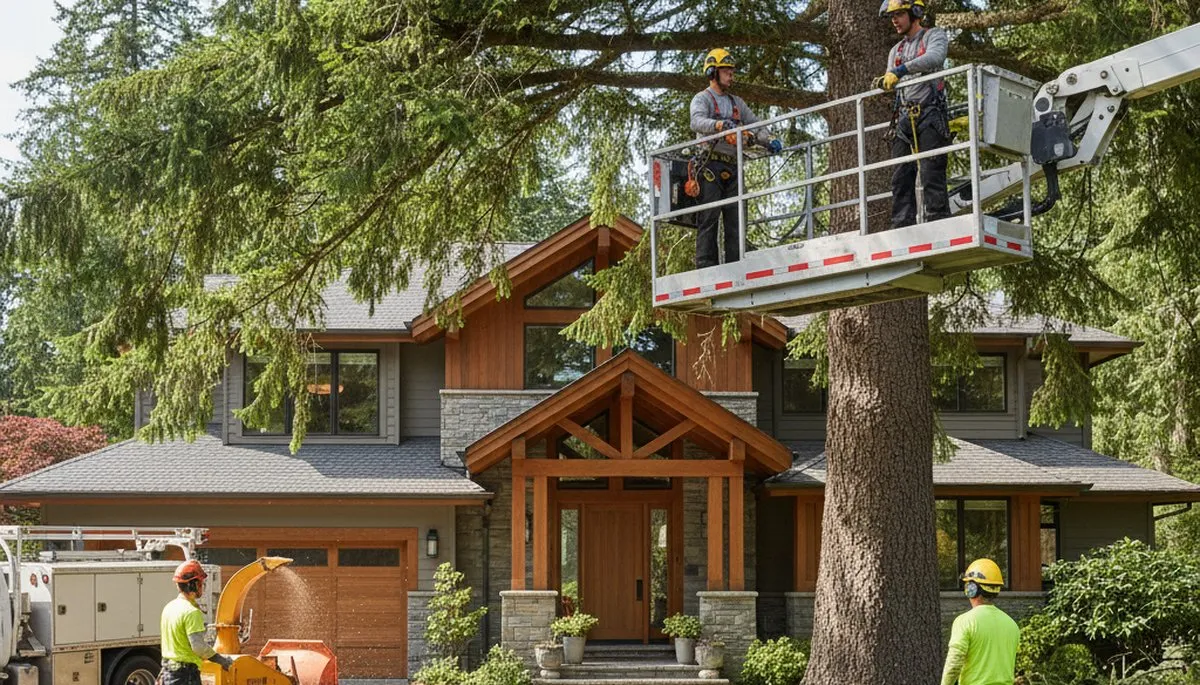
Local pros rely on compact aerial lifts and hand-climbing rigging methods, keeping ground disturbance low and reducing impact on neighbors while still handling challenging access conditions.
If you want to keep your Suquamish property in good shape all year, request a free quote from a local professional by calling (206) 201-1214.
Every property deserves safe access. Let Arbor Tree Care help keep yours that way.

Kick off your tree service project today!

Tree Services in Suquamish, WA: Seasonal Care That Fits
From routine maintenance to urgent storm cleanup, here is how local professionals help keep properties neat, stable, and protected all year long:
Routine Tree Trimming and Pruning in Suquamish, WA
- Waterfront Canopy Clearance: Trimming limbs that hang over driveways, roofs, and shoreline structures along Angeline Avenue NE to improve visibility and reduce wind catch.
- Bluff-Side Crown Reduction: Reducing the mass of tall conifers on elevated lots above Puget Sound, where strong winds can put extra stress on tree structure.
- Understory Shrub and Limb Clearance: Cutting back vine maple, salal, and alder growth that crowds established trees and restricts airflow across heavily wooded residential lots. Crews providing tree trimming services in Bainbridge Island, WA handle similar coastal canopy conditions across the Sound.
- Structural Pruning for Young Plantings: Shaping newly planted native trees such as Pacific dogwood and Oregon white oak so they develop strong branch structure before reaching full height near structures or property lines.
- Seasonal Deadwood Removal: Removing dead and declining limbs from mature conifers before storm season to lower risk and support the overall condition of the canopy across Suquamish homes.
Plan trimming before the November storm window so your property is better prepared for the wettest months on the Kitsap Peninsula.
Tree Removal Services in Suquamish, WA
- Hazardous Conifer Removal: Taking down structurally weakened Douglas firs and western red cedars that could fall on homes, sheds, or waterfront access routes across Suquamish.
- Storm-Damaged Tree Extraction: Clearing split or uprooted trees after Puget Sound wind events, with debris removal and cleanup included to restore safe access quickly.
- Dead Tree Removal Near Structures: Removing standing dead conifers near homes, garages, and retaining walls before decay advances and failure becomes harder to control.
- Selective Canopy Removal for View Restoration: Removing trees or large limbs that block water views on bluff-side properties, using rigging methods that protect nearby vegetation and structures.
- Root-Damaged Tree Removal: Removing trees whose roots have been weakened by laminated root disease or shoreline erosion, where unstable anchoring makes the tree unsafe to keep standing.
Prompt removal of compromised trees helps protect foundations, fencing, and waterfront access before storm damage has time to build.
Stump Grinding and Cleanup in Suquamish, WA
- Waterfront Lot Stump Grinding: Grinding stumps left behind after conifer removal on sloped shoreline properties, where tripping hazards and root decay near septic systems can become ongoing issues.
- Driveway and Path Clearance: Removing stumps along narrow access roads and driveways that limit vehicle movement or block future maintenance work.
- Root System Cleanup After Removal: Cutting back and treating exposed lateral roots after stump grinding to discourage regrowth from alder, bigleaf maple, and other fast-spreading native species common in Suquamish.
- Post-Removal Site Restoration: Filling in voids after stump extraction and reseeding disturbed soil to stabilize slopes and restore a clean, usable surface on residential lots. Similar cleanup work is standard for tree removal contractors in Port Orchard, WA, where coastal lot conditions are much like those in Suquamish.
- Multi-Stump Grinding Projects: Managing several stumps on larger wooded parcels in one visit, which can reduce disruption and avoid the need for separate appointments.
Stump grinding removes trip hazards, limits pest activity in decaying wood, and prepares the property for replanting or landscape improvements that fit Suquamish’s coastal soils.
Emergency Tree Services in Suquamish, WA
- Storm Response and Fallen Tree Removal: Rapid cleanup after Puget Sound wind events to clear trees from driveways, rooflines, and access paths so residents can move safely again.
- Hazard Limb Extraction After Wind Events: Removing limbs that are broken, hanging, or partially attached after storms, since leaving them in place keeps people and property at risk.
- Emergency tree services for Root Failure Events: Responding when saturated soil leads to whole-tree uprooting, a common issue on Suquamish’s sloped waterfront lots after long periods of rain.
- Post-Storm Canopy Assessment: Inspecting the remaining tree structure after damage to identify hazards that may not be easy to see right away, so owners know what needs urgent attention and what can wait.
- Coordination With Utility and Access Restoration: Working with property owners and utility contacts when fallen trees affect power lines, water access, or shared driveways in Suquamish’s denser residential areas.
When storms move through Kitsap County, quick and organized emergency response helps protect your property, your neighbors, and the access routes your household uses every day.